
There is a version of Turks and Caicos that most of the world knows. It shows up in travel magazines, on the Instagram feeds of celebrities, and in the glossy brochures of five-star resorts. Crystal water. White sand. Overwater bungalows. A destination so pristine it almost looks fictional. And in many ways, that image has been extraordinarily good for these islands. Tourism revenue has soared, infrastructure has grown, and Turks and Caicos has carved out a reputation as one of the most sought-after luxury destinations on the planet.
But behind that polished image, a quieter and more complicated conversation is happening among the people who actually call these islands home. As the luxury boom continues to reshape the physical and economic landscape of Turks and Caicos, many locals are beginning to ask a question that does not appear in any resort brochure: are we losing ourselves in the process?
The Boom Is Real, and It Is Big
To understand the cultural tension, you first have to understand the scale of what has happened here. Over the past two decades, Turks and Caicos has transformed from a relatively under-the-radar Caribbean destination into a global luxury hotspot. Providenciales, the most commercially developed island, now hosts some of the most expensive resorts in the Western Hemisphere. Real estate prices have climbed to levels that rival Miami and parts of London. Private villa developments, yacht marinas, and high-end retail outlets have multiplied rapidly, and international hotel brands have staked their claims along Grace Bay and beyond.
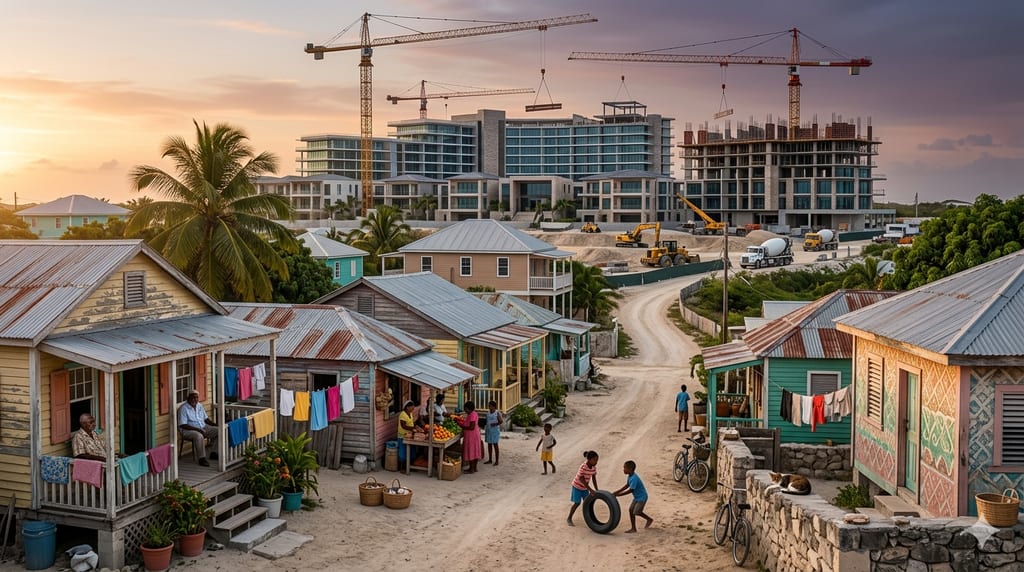
The numbers tell a striking story. Tourism contributes the overwhelming majority of the country’s GDP, and visitor arrivals have consistently broken records year after year. The construction cranes that dot the Providenciales skyline are a visual symbol of an economy that is, by most financial measures, thriving.
For a small island territory with limited natural resources beyond its coastline, this kind of economic growth is not something to take lightly. It has created jobs, built roads, funded public services, and given many Turks and Caicos Islanders – known as Belongers – genuine opportunities that previous generations did not have. That is worth acknowledging before anything else.
But prosperity and cultural preservation are not always natural partners. And that is where the real conversation begins.
What Is Being Built Over
Culture is not just music and food and festivals, though those things matter deeply. Culture is also the relationship between a community and its land, the informal gathering spaces where people connect, the pace of daily life, the sense of familiarity that makes a place feel like home rather than a product.
In Turks and Caicos, many Belongers describe a growing sense of displacement – not always physical, but social and psychological. As luxury developments expand, the spaces that once belonged to the community in an unspoken way have gradually been absorbed into a tourist economy. Beaches that families once used freely now sit adjacent to private resort properties. Local businesses that served the community for decades find themselves priced out of commercial areas where the rent has climbed to meet the expectations of international brands.
There is also the question of who development is actually for. When a new resort opens on Providenciales, the marketing targets wealthy visitors from North America and Europe. The aesthetic, the menus, the entertainment – all of it is calibrated for a foreign audience. Local culture often appears as a decorative element rather than a living, breathing part of the experience. A steel drum performance at the hotel bar. A “local flavor” night on Wednesdays. These gestures are not meaningless, but they are a far cry from genuine cultural integration.
The Belonger Experience
Conversations with Belongers reveal a complicated mix of pride, gratitude, and unease. Many are proud of what Turks and Caicos has become on the world stage. They want the economic opportunities that come with tourism and development. But they also describe a feeling of being spectators in the transformation of their own homeland.
Young Belongers, in particular, face a specific kind of pressure. Housing costs have risen so dramatically in areas like Providenciales that many cannot afford to live in the places where they grew up. The culture of family compounds, multi-generational neighborhoods, and tight-knit community life is under strain as economic realities push people to the margins – literally and figuratively – of the island’s most developed areas.
There is also the matter of cultural transmission. Older generations carried knowledge of traditional fishing practices, bush medicine, oral histories, and community rituals that gave Turks and Caicos its distinct identity within the Caribbean. When the rhythms of daily life are disrupted by rapid development, and when young people are drawn almost exclusively into an economy built around serving tourists, those threads of cultural knowledge become harder to pass down.
The Voices Pushing Back
Not everyone is standing still. Across Turks and Caicos, there are individuals, community organizations, and cultural advocates who are actively working to ensure that the luxury boom does not hollow out the identity of these islands.
Local artists are using their platforms to tell stories that the resort brochures ignore. Community events centered on traditional food, music, and heritage are drawing real participation. Advocates are pushing for policies that protect Belonger access to land, prioritize local hiring in the tourism sector, and invest in cultural education within schools.
There is also a growing recognition among some developers and tourism stakeholders that authentic culture is not just a social good – it is actually a competitive advantage. Travelers are increasingly seeking genuine experiences rather than generic luxury. A Turks and Caicos that retains its cultural soul is ultimately a more compelling destination than one that feels like any other high-end resort strip in the world.
A Question Without an Easy Answer
Is Turks and Caicos losing its cultural identity in the luxury boom? The honest answer is that it is complicated. Some aspects of that identity are under real and serious pressure. Others are being protected, celebrated, and passed forward with genuine determination. The outcome will depend largely on whether the people who make decisions about development, policy, and investment choose to treat Belonger culture as central to the future of these islands rather than incidental to it.
What is clear is that the question itself needs to be asked louder, and more often, in rooms where real decisions are made. The beauty of Turks and Caicos has always been about more than its water. The people, the history, the way of life that evolved on these islands over generations – that is the foundation everything else is built on. And foundations, once cracked, are far harder to restore than a stretch of beachfront.
The luxury boom brought opportunity. What Turks and Caicos does with that opportunity, and whose story gets told in the process, will define these islands for generations to come.